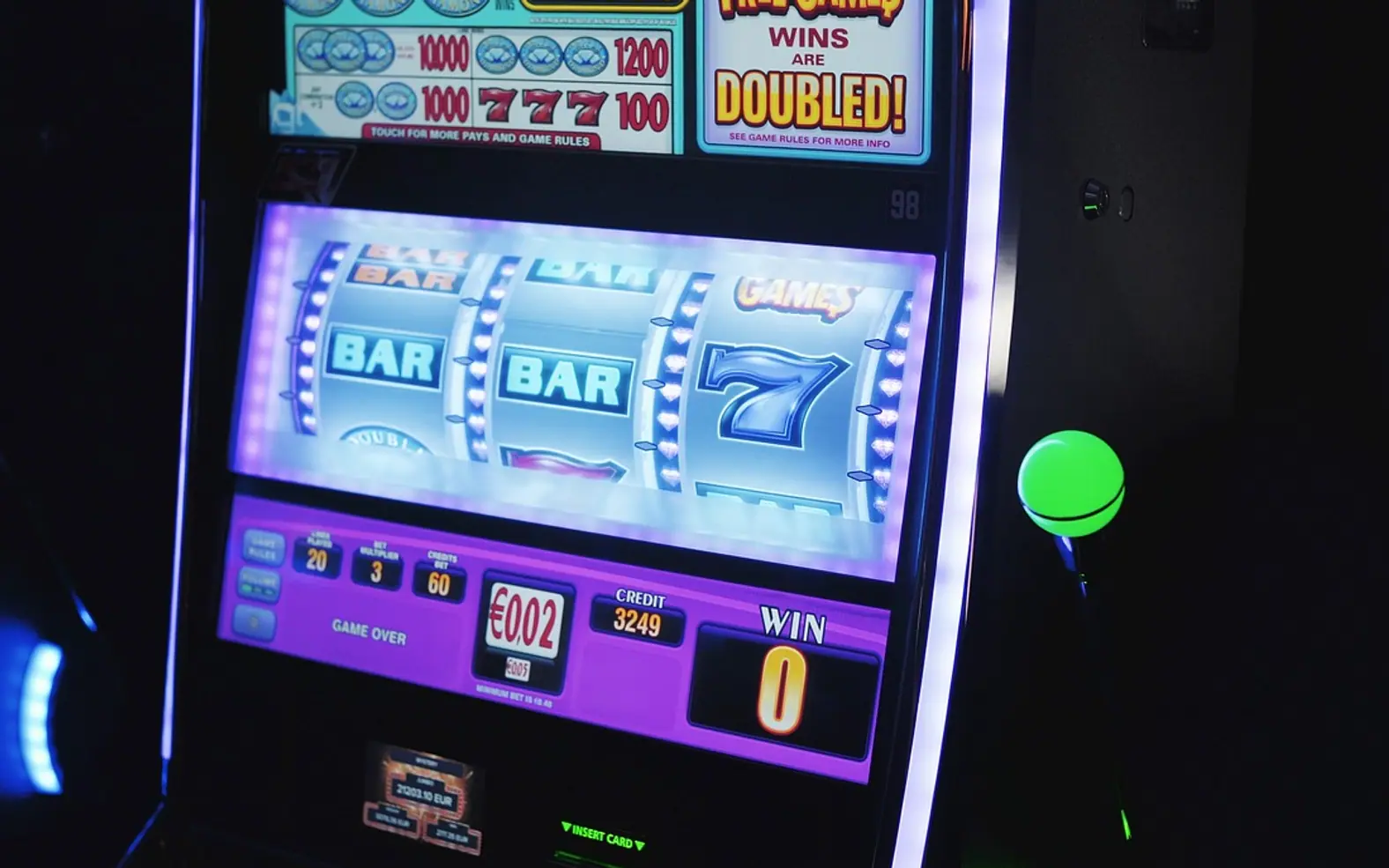
Three gold coins land on the last three reels of a payline. On most slots that is nothing at all, because the first reel shows a card symbol and the count never gets started. On a pays-both-ways slot the same screen is a win: the game reads the line a second time, starting from the right edge, and three matching symbols from that side count just as three from the left would.
That is the whole idea in one picture. The rest of this guide covers how the two readings are combined, which patterns still fall through the gap and why the feature does not make a game more generous overall.
The usual rule: left to right, no gaps
A standard line slot checks each payline from the leftmost reel. The symbol on reel one sets the target, and the run continues only while each next reel shows the same symbol or a wild. The first break ends the count. So a line reading coin, coin, coin, card, card pays three coins, while card, coin, coin, coin, coin pays nothing for the coins, however good they look.
That left-edge habit goes back to the electromechanical cabinets that first offered several lines, a period traced in the story of the slot machine's past and present influence. Video games kept the convention because players already knew it and pay tables stay short.
What "pays both ways" adds
A both-ways game runs a second check on every line, this time starting at the rightmost reel and moving left. The same rules apply in mirror image: a run must begin on the edge reel and continue without a break. Each line can therefore produce up to two results, one per direction.
- Left-hand run: starts on reel one and moves right.
- Right-hand run: starts on the last reel and moves left.
- Middle-only matches, such as identical symbols on reels two, three and four, still pay nothing, because neither run reaches them from an edge.
- A full line of five matching symbols is normally paid once, not twice. The rules screen states how the game treats it.
Reading a hypothetical screen
| Line shown (reel 1 to reel 5) | Left-to-right only | Both ways |
|---|---|---|
| Star, star, star, ten, jack | Three stars | Three stars |
| Ten, jack, star, star, star | Nothing | Three stars (from the right) |
| Star, star, ten, bell, bell | Nothing (two stars too short) | Nothing, if three is the minimum |
| Bell, bell, bell, star, star | Three bells | Three bells, plus two stars if two pay |
| Ten, star, star, star, jack | Nothing | Nothing (middle only) |
| Star, star, star, star, star | Five stars | Five stars, usually counted once |
Wilds behave as they do elsewhere. One wild in the centre can sit inside both a left run and a right run at the same time, which is why a single central wild on a both-ways game often lights up two separate wins.
Where the extra wins come from
Doubling the ways a line can start roughly doubles how often short combinations appear. Studios do not hand that out for free. To keep the return to player at the figure they have chosen, they usually lower individual line pays, thin the premium symbols on the reel strips, or both. The mechanics of how strips and the random number generator settle a result are set out in the pillar on how slot machines really work.
The practical effect is a different rhythm rather than a better deal. Both-ways games tend to show more frequent, smaller wins. Many of those wins will be lower than the stake for the spin, so the balance can drift down while the screen keeps celebrating.
Both ways in different formats
The feature turns up in several places:
- Fixed-line games, where every one of perhaps ten or twenty lines is read in both directions.
- Ways-to-win games, where adjacent-reel combinations are counted from both edges. Some of these advertise a doubled ways figure; the rules explain whether that figure simply reflects the second direction.
- Feature rounds only. A number of titles keep left-to-right play in the base game and switch to both ways during free spins, which makes the bonus feel livelier.
- Retro three-reel games rarely use it. Their short lines leave little room, and the format described in what classic slots are depends on a compact, single-direction pay table.
Stacks and both-ways lines
Tall blocks of one symbol pair well with a second reading direction. A stack on the last reel can start right-hand runs on every row it covers, much as a stack on reel one does for left-hand runs. That pairing is one reason designers like to combine the two, and the piece on stacked symbols in slots shows how those stacks sit on the strips.
How to tell whether a game pays both ways
Open the information or pay table screen before the first spin. Look for the words "pays both ways", "win both ways" or a line diagram with arrows pointing in both directions. Check three details while you are there:
- Whether a full line is paid once or in both directions.
- Whether the right-hand reading applies in the base game, the feature, or both.
- Whether scatter pays are separate from line pays, as they usually are.
The short version
Pays-both-ways slots read every line twice, once from each edge, so combinations that begin on the last reel count too. Wins land more often, but the pay table is tuned to keep the published return where it was. The feature changes how a session feels, not how the long-run maths ends.
Online slots are an adult pastime and are not permitted everywhere, so check the rules where you live; pick a spend for the session before you open a game, and treat any win as a bonus rather than a reason to keep going.